
What is Localized Prostate Cancer?
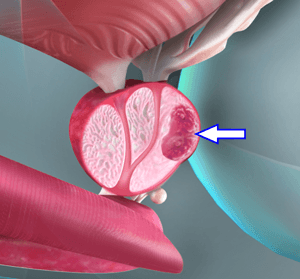
Localized prostate cancer is cancer that is restricted within the prostate gland and has not spread to other parts of your body. Cancer can be treated by various methods, which include active surveillance, medications, radiation therapy, and chemotherapy.
Active surveillance, also known as watchful waiting, is a process where you are observed over some time. Various tests such as blood PSA levels (a substance produced by the prostate gland), digital rectal examination, imaging studies, and biopsies may be performed at various intervals to document the progress of the disease.
Radiation therapy is a procedure where high-energy rays are used to destroy cancer cells. The different types of radiation therapies include:
- External Beam Radiotherapy (EBRT) consists of a beam or multiple beams of radiation that can be used for destroying tumors and surrounding cancer cells. It contains high energy photons that target and destroy the cancer cells. The radiation beams are generated from a machine called a linear accelerator, which generates high-energy X-rays or electrons that destroy the tumor cells without touching the skin of the patient or the tumor tissue. Along with the cancer tissues, the beam also destroys the surrounding healthy tissues.
- Intensity-modulated Radiation Therapy (IMRT) is one of the advanced forms of high-precision radiotherapy that radiates high energy photons to destroy the cancer cells. The device uses computer-controlled linear accelerators that deliver radiation doses to a tumor or surrounding tissues of the tumor. It also uses a 3D imaging procedure that further helps by providing better three-dimensional images of the tumor during computed tomography (CT) or magnetic resonance imaging (MRI). The 3D view of the tumor assists the physician to plan for better calculation of the doses and intensity of the radiation therapy.
- Three-dimensional Conformal Radiation Therapy (3D-CRT) is a technique where the beams of rays are shaped to match the tumor and are beamed from several directions. Computers are used to locate and treat the tumor more precisely, causing minimal damage to the adjacent tissues.
- Brachytherapy, also known as internal radiation therapy, is a technique where pellets of radioactive materials are placed directly into the prostate via a special needle. Low dose or high dose radioactive materials may be used depending on the patient’s condition and the surgeon’s preference. Low dose materials are left in place, whereas high dose materials are removed after a few minutes of treatment. Brachytherapy is often combined with external beam radiation given at a lower dose. As most of the radiation is concentrated at the prostate itself, brachytherapy spares the adjacent tissues from damage.
Androgens are male hormones that stimulate the growth of cancer cells in the prostate. Androgen deprivation therapy, also known as hormone therapy, reduces the levels of androgen and prevents it from getting through to the prostate cancer cells. Some types of hormone therapies lower the androgen levels in the body, whereas others block the execution of these hormones.
Chemotherapy involves the use of anti-cancer drugs. These drugs are either given intravenously (through the veins) or orally (by mouth). This type of treatment is extremely useful in cases where cancer has spread to different parts of the body. These drugs work against the cells that divide quickly; thereby, slowing down the growth of cancer and its associated symptoms.
Chemotherapy can affect the cells of other parts of the body such as the bone marrow, hair follicles, mouth, and intestines, and can cause side effects. Some of the possible side effects include loss of appetite, nausea, vomiting, diarrhea, fatigue, mouth sores and hair loss. Most of the side effects are temporary and disappear with the discontinuation of chemotherapy. Some chemotherapy drugs can have more severe side effects and your doctor will explain the risks and benefits before starting your therapy.
What are the Conservative Treatments for Pain Associated with Cancer?
Cancer is not always associated with pain. Some patients may experience pain and there are different types of medicinal and non-medicinal methods to alleviate pain. The type of medicine and how medicine is administered depends on the type and extent of the pain.
Some of the common types of medicines used to manage pain include non-steroidal anti-inflammatory drugs (NSAIDs), opioids or narcotics, anti-depressants, anti-seizure medicines, and steroids.
Some of the non-medical methods include exercise, relaxation, skin stimulation, biofeedback, imagery, transcutaneous electric nerve stimulation (TENS), acupuncture, physical therapy, and emotional support and counseling.
If you wish to be advised on the most appropriate treatment, please give us a call at to schedule an appointment or request an appointment online.