
What is Stress Incontinence?
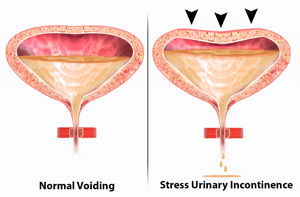
Stress incontinence is the involuntary loss of urine during activities that exert stress on the bladder, such as running, heavy lifting, hi-intensity exercises, coughing, laughing, and sneezing. It usually occurs when the muscles of the pelvic floor that support the urethra and the muscles of the urinary sphincter that control urination become weak.
Stress incontinence is not caused due to mental stress. It is more common in women than in men and can be managed through treatment.
What are the Causes of Stress Incontinence?
The pelvic floor muscles and urinary sphincter muscles can become weak due to reasons such as:
- Childbirth, especially a vaginal delivery
- Prostate surgery
- Obesity
- Chronic coughing
- Intensive sports for many years
The factors that increase the risk of stress incontinence include:
- Advancing age
- Previous pelvic surgery
What are the Symptoms of Stress Incontinence?
Stress incontinence is characterized by a sudden loss of urine during activities such as:
- Laughing
- Coughing
- Sneezing
- Exercising
- Lifting something heavy
- Sexual intercourse
How is Stress Incontinence Diagnosed?
Your doctor will review your medical history and perform a physical exam, which may include a rectal exam and a pelvic exam. The other diagnostic tests include:
- Urine sample to detect traces of blood, infection, and other abnormalities
- Urinary stress test where your doctor observes urine loss when you cough or bend downwards
Bladder function tests may include:
- Pelvic ultrasound scan: To measure the amount of residual urine in your bladder after you urinate.
- Video urodynamics: Images are created as the bladder fills and empties by administering a mixture of warm fluid and imaging dye that is visible on the X-rays.
- Cystoscopy: In this test, a scope is inserted into your bladder to detect any blockages or other abnormalities in the bladder and urethra.
What are the Treatment Options for Stress Incontinence?
Stress incontinence can be treated through a combination of approaches. These include:
Lifestyle Changes/Behavioral Therapy
Behavioral therapy or lifestyle changes include:
- Regular Kegel exercises to strengthen pelvic floor muscles and urinary sphincter
- Consume a fiber-rich diet
- Regulate your fluid consumption in terms of volume, frequency, and the time of consumption
- Avoid carbonated, caffeinated, and alcoholic beverages as they may irritate and affect the bladder function
- Quit smoking, shed excess weight, and treat chronic coughs
Medications
There is no specific FDA approved drug to treat stress incontinence in the United States. However, in Europe, the antidepressant duloxetine is prescribed for this condition. The drug causes nausea as a common side effect and the symptoms return quickly once the drug is stopped.
Medical Devices
Medical devices are available that can be placed inside the body to help control stress incontinence. These include:
Vaginal Pessary
A specialized ring-shaped device for women that is inserted in the vagina and kept in place all day. Vaginal pessaries support the base of your bladder to prevent leakage of urine during physical activities and are useful for a prolapsed bladder. Vaginal pessaries are recommended if you do not want to undergo surgery. However, it has to be routinely removed and cleaned and your doctor will provide proper instructions to you.
Urethral Inserts
This is a small disposable device inserted into the urethra to prevent leakage. It is usually recommended for hi-intensity activities such as weightlifting and running. Urethral inserts can be worn for up to eight hours a day.
Surgery
Surgery is recommended if conservative treatments do not provide symptomatic relief. The goal of surgery is to tighten the sphincter muscles or support the neck of the urinary bladder to relieve incontinence. The different surgical procedures are:
Sling Procedure
In this procedure, a person's own tissues, a synthetic mesh, or an animal or donor tissue is used to create a hammock or sling to support the urethra. It is more commonly performed in women but it can also be performed in men too.
Injection of Bulking Agents
Drugs such as synthetic polysaccharides or gels are injected into tissues around the upper portion of the urethra. They cause swelling in the area around the urethra and thus improve the closure of the urinary sphincter.
Retropubic Colposuspension
This surgery can be performed laparoscopically or through an incision in your abdomen. In this procedure, the ligaments along the pubic bone are sutured to lift and support the tissues near the neck of the bladder and the upper portion of the urethra.
Implantation of an Inflatable Artificial Sphincter
This procedure is used for men and involves the placement of an inflatable device around the upper portion of the urethra. This device replaces the function of the sphincter. Tubes connect the device to a pressure-regulating balloon in the pelvic region and a manually operated pump in the scrotum.
If you wish to be advised on the most appropriate treatment, please give us a call at to schedule an appointment or request an appointment online.